ADHD and Acupuncture: A Natural Approach to Supporting Focus, Calmness, and Emotional Balance

Dr. Tatyana's Health and Wellness Blog
Treating the whole person to restore optimal health. Check back often for up-to-date news and information about acupunture and Chinese medicine.
Most Recent Posts ...



Posted on: 8/31/2026

Posted on: 8/17/2026
Search All Blog Posts
Blog Post Archive Categories
- How a High-Stress Job Can Weaken Your Immune System and Disrupt Your Body`s Natural Balance
- ADHD and Acupuncture: A Natural Approach to Supporting Focus, Calmness, and Emotional Balance
- Perimenopause and Hormonal Changes: How Acupuncture Can Help Women Feel Balanced Again
- Stubborn Weight Retention After Menopause: Why It's So Common - and How Acupuncture Can Help
- Chronic Stress and Burnout: How Acupuncture Can Help You Restore Balance
- Stubborn Neck Pain: How Acupuncture Can Help You Find Lasting Relief
- Chronic Fatigue and Chronic Inflammation: A Holistic Look Through Western and Eastern
- The Hidden Dangers of Overusing Supplements: Are You Taking More Than You Should?
- The Importance of Exercise and How to Stay Motivated for a Healthier You
- Difficulty concentrating or completing tasks
- Forgetfulness and disorganization
- Restlessness or difficulty relaxing
- Impulsive behavior
- Emotional sensitivity and frustration
- Trouble transitioning between activities
- Sleep difficulties
- Feeling mentally overwhelmed
- Difficulty managing time and responsibilities
- Supporting Relaxation and Stress Management
Many people with ADHD experience emotional overwhelm, frustration, or difficulty relaxing after a busy day.
Stress can make concentration and emotional regulation even more challenging.
Acupuncture may promote a sense of relaxation and help some individuals manage stress.
A calmer state may make it easier to engage in healthy routines, although this does not mean acupuncture directly treats the underlying ADHD. - Supporting Better Sleep
Sleep difficulties frequently accompany ADHD.
Children may resist bedtime, struggle to settle down, or wake repeatedly. Adults may experience racing thoughts and difficulty falling asleep.
Inadequate sleep can worsen attention, irritability, and executive functioning.
Some studies suggest acupuncture may improve subjective sleep quality in certain populations, although ADHD-specific evidence remains limited.
Dr. Tatyana considers sleep habits, daily routines, and other contributing factors when developing an individualized care plan. - Addressing Anxiety and Emotional Tension
ADHD can coexist with anxiety and other mental health conditions.
Some individuals experience constant worry, physical tension, or difficulty managing stressful situations.
Acupuncture may be a relaxing complementary therapy for some patients.
When anxiety is persistent or significantly affects daily life, appropriate psychological or medical treatment is important. - Supporting Physical Comfort
Children and adults with ADHD may also experience headaches, neck and shoulder tension, or other physical discomfort.
Acupuncture has evidence supporting its use for certain pain conditions, including some chronic headaches and musculoskeletal pain.
Addressing physical discomfort may contribute to overall well-being, even though it does not directly resolve ADHD symptoms. - Encouraging a Consistent Self-Care Routine
People with ADHD sometimes struggle to maintain regular sleep, exercise, and stress-management routines.
Scheduled wellness visits can provide an opportunity to discuss these habits and identify practical ways to improve them.
A comprehensive treatment plan should consider the individual’s daily schedule, family responsibilities, and personal goals. - Individualized acupuncture treatments
- Gentle pediatric acupuncture approaches
- NeurOptimal Dynamic Neurofeedback
- Supportive lifestyle and wellness recommendations
- A personalized treatment plan with regular reassessment
ADHD and Acupuncture: A Natural Approach to Supporting Focus, Calmness, and Emotional Balance
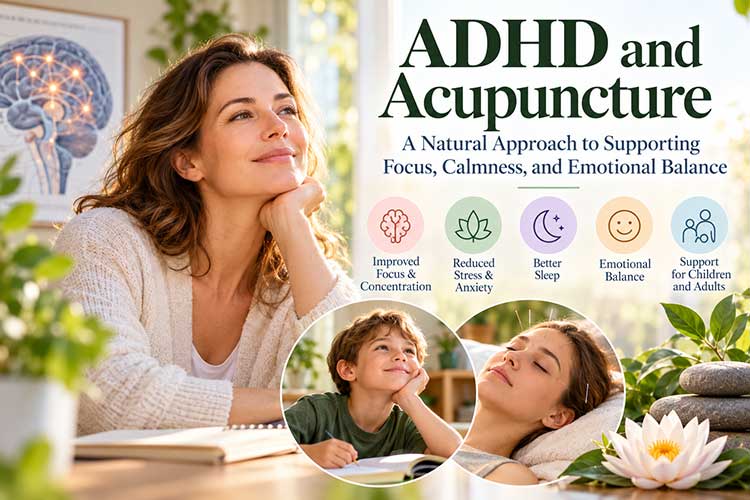
Discover how acupuncture and neurofeedback may complement conventional ADHD care for children, teenagers, and adults.
Do you struggle to stay focused, feel constantly overwhelmed, or find it difficult to quiet your mind? Perhaps your child has trouble sitting still, completing homework, managing emotions, or falling asleep at night.
Living with Attention-Deficit/Hyperactivity Disorder (ADHD) can be challenging, not only for the individual but also for the entire family.
ADHD affects more than attention. It can influence emotional regulation, organization, sleep, relationships, and everyday functioning.
While medications and behavioral therapies remain important evidence-based treatments, many families are interested in complementary approaches that may support relaxation, stress management, and overall well-being.
At Family Acupuncture and Health in Kirkland, Washington, Dr. Tatyana offers an individualized approach that may combine acupuncture, Dynamic Neurofeedback, and lifestyle guidance to support children and adults living with ADHD.
Understanding ADHD: More Than Difficulty Paying Attention
ADHD is a neurodevelopmental condition involving differences in attention regulation, impulse control, and executive functioning.
Symptoms vary significantly from person to person.
Some individuals primarily experience inattentiveness, while others struggle with hyperactivity and impulsivity. Many experience a combination.
Common ADHD-related challenges include:
For children, these challenges may affect school performance, friendships, and family routines.
For adults, ADHD can interfere with productivity, relationships, emotional well-being, and the ability to manage everyday responsibilities.
ADHD is not a lack of intelligence, motivation, or discipline. It involves differences in how the brain regulates attention, behavior, and executive functions.
Can Acupuncture Help People With ADHD?
Acupuncture has been used in traditional Chinese medicine for centuries to address a variety of physical and emotional concerns.
From a traditional Chinese medicine perspective, difficulties with restlessness, concentration, and emotional regulation may be interpreted through patterns involving the Heart, Liver, Kidney, and Spleen systems.
Treatment focuses on the individual’s overall pattern of symptoms rather than the diagnosis alone.
Modern researchers have explored whether acupuncture may influence nervous system activity, stress responses, and sleep.
However, scientific evidence is currently insufficient to establish acupuncture as an effective treatment for the core symptoms of ADHD. It should not replace established ADHD therapies.
Acupuncture may nevertheless be considered as a complementary wellness approach for individuals who find it relaxing or helpful for associated concerns.
Five Ways Acupuncture May Support People Living With ADHD
Acupuncture and Neurofeedback: A Comprehensive Approach
One of the distinctive services offered at Family Acupuncture and Health is the opportunity to combine acupuncture with NeurOptimal® Dynamic Neurofeedback.
Neurofeedback is a noninvasive technique that uses real-time information about brain activity to provide feedback.
Different neurofeedback systems use different approaches, and the evidence supporting one system cannot automatically be applied to another.
What Is Dynamic Neurofeedback?
NeurOptimal Dynamic Neurofeedback uses sensors to monitor electrical activity from the scalp and provides auditory feedback through music.
The system is marketed as a tool for supporting self-regulation.
Some individuals report feeling more relaxed, sleeping better, or experiencing improvements in their overall well-being after sessions.
However, research has not established that NeurOptimal specifically treats ADHD, and rigorous studies of neurofeedback for ADHD have produced mixed results.
Why Combine Acupuncture and Neurofeedback?
Dr. Tatyana may offer both therapies as part of an individualized complementary wellness plan.
Acupuncture may provide a relaxing treatment experience, while neurofeedback offers a different form of noninvasive feedback-based training.
Although these approaches may be used together, the combination has not been proven to improve ADHD symptoms more effectively than standard treatment.
The intention is to support the person’s broader well-being while maintaining appropriate conventional care.
ADHD in Children: A Gentle and Individualized Approach
Parents often ask whether acupuncture is appropriate for children who struggle with attention, hyperactivity, anxiety, or sleep.
Pediatric acupuncture differs from treatment for adults.
Depending on the child’s age, comfort level, and individual needs, treatment may involve very gentle techniques, fewer needles, or non-needle approaches.
Dr. Tatyana has experience working with pediatric patients and emphasizes a calm, supportive environment.
Treatment should always respect the child’s comfort and willingness to participate.
For children with ADHD, parent training in behavior management, school-based support, and appropriately prescribed medication remain important evidence-based options, depending on age and clinical needs.
Complementary therapies should be discussed with the child’s healthcare provider.
Adult ADHD: Managing Stress, Mental Overload, and Sleep Difficulties
ADHD is not limited to childhood.
Many adults receive their diagnosis later in life, sometimes after years of struggling with disorganization, procrastination, emotional overwhelm, or chronic stress.
Women, in particular, may have predominantly inattentive symptoms that were not recognized during childhood.
For adults with ADHD, a comprehensive wellness approach may focus on improving sleep habits, reducing stress, managing physical tension, and establishing sustainable daily routines.
Acupuncture may be one optional component of this broader approach.
Why a Series of Treatments May Be Recommended
Acupuncture is often provided as a series of appointments rather than a single session.
Some individuals notice relaxation after their first visit, while others need time to determine whether treatment provides any meaningful benefit.
Dr. Tatyana may recommend an initial series of sessions with periodic reassessment based on individual goals, comfort, and response.
However, there is no scientifically established acupuncture schedule or number of sessions proven to treat ADHD.
The decision to continue should be based on observable benefits and patient preferences.
Lifestyle Recommendations for Children and Adults With ADHD
A comprehensive approach to ADHD should extend beyond the treatment room.
Nutrition: Encourage regular, balanced meals containing protein, vegetables, whole grains, and healthy fats. Avoid overly restrictive diets unless medically indicated.
Physical activity: Walking, swimming, cycling, and other enjoyable activities support physical health, mood, and sleep.
Consistent sleep schedules: Regular bedtimes and wake-up times can help reduce the effects of insufficient sleep.
Structured routines: Visual schedules, reminders, calendars, and breaking large tasks into smaller steps may improve daily functioning.
Mindfulness and relaxation: Age-appropriate breathing exercises and relaxation practices may help with stress management.
Professional ADHD care: Evidence-based behavioral interventions, educational accommodations, and medication when appropriate should remain central to ADHD management.
Why Choose Family Acupuncture and Health in Kirkland?
Dr. Tatyana brings a distinctive combination of medical education, advanced acupuncture training, and experience with complementary therapies.
Her approach recognizes that every individual with ADHD has different needs, challenges, and strengths.
Rather than focusing only on attention difficulties, she considers the broader picture, including sleep, stress, emotional well-being, and physical comfort.
Services may include:
The goal is to create a supportive environment where children and adults feel comfortable and understood.
Helping the Mind and Body Find Greater Calm
Living with ADHD can be demanding, but the right combination of medical care, practical strategies, family support, and healthy routines can make a meaningful difference.
Acupuncture and neurofeedback may be explored as complementary wellness options, particularly for relaxation and stress-related concerns, while recognizing the limitations of current scientific evidence.
At Family Acupuncture and Health, Dr. Tatyana is committed to helping patients explore individualized approaches that support their overall quality of life.
Interested in learning whether acupuncture or neurofeedback might be appropriate for you or your child?
Contact Family Acupuncture and Health in Kirkland, Washington, to schedule a consultation with Dr. Tatyana.