Neck Pain from Chronic Computer Work: Why Your Desk May Be Causing More Than Just a Stiff Neck

Dr. Tatyana's Health and Wellness Blog
Treating the whole person to restore optimal health. Check back often for up-to-date news and information about acupunture and Chinese medicine.
Most Recent Posts ...

Posted on: 8/3/2026


Posted on: 6/22/2026

Search All Blog Posts
Blog Post Archive Categories
- Rotator Cuff Injuries: Natural Treatment Options Before Considering Surgery
- Neck Pain from Chronic Computer Work: Why Your Desk May Be Causing More Than Just a Stiff Neck
- Sports Injuries vs. Trauma: What's the Difference and Why Early Treatment Matters
- Stubborn Weight Retention After Menopause: Why It's So Common - and How Acupuncture Can Help
- Chronic Stress and Burnout: How Acupuncture Can Help You Restore Balance
- Stubborn Neck Pain: How Acupuncture Can Help You Find Lasting Relief
- Chronic Fatigue and Chronic Inflammation: A Holistic Look Through Western and Eastern
- The Hidden Dangers of Overusing Supplements: Are You Taking More Than You Should?
- The Importance of Exercise and How to Stay Motivated for a Healthier You
- Poor desk ergonomics
- Looking down at a laptop
- Poor monitor height
- Sitting for prolonged periods
- Rounded shoulders
- Forward head posture
- Weak upper back muscles
- Tight chest muscles
- Chronic stress causing muscle tension
- Inadequate movement throughout the workday
- Neck pain or tightness
- Pain between the shoulder blades
- Upper trapezius muscle tension
- Frequent headaches
- Limited range of motion
- Pain when turning the head
- Shoulder pain
- Tingling or numbness into the arm
- Muscle spasms
- Fatigue after working on the computer
- Jaw tension or TMJ symptoms
- Difficulty sleeping because of neck discomfort
- Tight muscles
- Trigger points
- Inflamed fascia
- Restricted joints
- Poor posture
- Chronic muscle guarding
- Nervous system sensitization
- Cold laser therapy
- Cupping
- Myofascial release
- Therapeutic stretching
- Craniosacral therapy
- Neurofeedback for stress reduction
- Home exercise recommendations
- Position your monitor at eye level.
- Keep your shoulders relaxed.
- Sit with your feet flat on the floor.
- Support your lower back.
- Keep your elbows close to your body.
- Avoid cradling your phone between your shoulder and ear.
- Use a headset for long phone calls.
- Stand up and move every 30–60 minutes.
- Stretch your neck and shoulders throughout the day.
- Chin tucks
- Shoulder blade squeezes
- Chest stretches
- Upper trapezius stretches
- Levator scapulae stretches
- Thoracic spine mobility exercises
- Significant arm weakness
- Loss of coordination
- Persistent numbness
- Severe trauma
- Fever
- Unexplained weight loss
- Difficulty walking
- Loss of bowel or bladder control
Neck Pain from Chronic Computer Work: Why Your Desk May Be Causing More Than Just a Stiff Neck
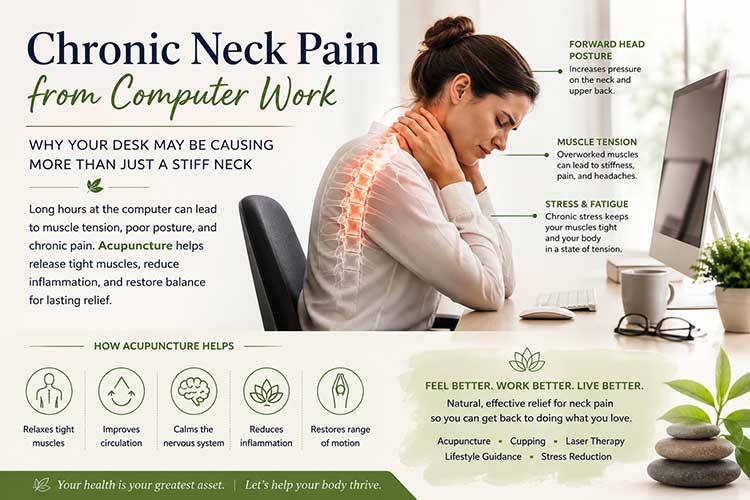
If you spend several hours each day working on a computer, you're not alone. Millions of people work at desks, attend virtual meetings, and spend additional hours looking at smartphones and tablets. While technology has made our lives more convenient, it has also contributed to one of the most common musculoskeletal complaints we see in the clinic—chronic neck pain.
Many people assume neck pain is simply part of getting older or having a stressful job. However, persistent neck pain is often the result of poor posture, repetitive strain, muscle imbalances, and prolonged stress on the cervical spine. The good news is that, in many cases, it can be treated naturally without relying on pain medication.
At Family Acupuncture and Health, we frequently help patients reduce pain, improve mobility, and return to their daily activities through a comprehensive approach that includes acupuncture, lifestyle modifications, and individualized treatment plans.
Why Does Computer Work Cause Neck Pain?
The human head weighs approximately 10–12 pounds when positioned directly over the shoulders. Unfortunately, most people do not maintain this ideal posture while working.
Every inch your head moves forward increases the amount of force placed on your neck and upper back. Looking down at a laptop or phone for hours each day places tremendous strain on the muscles, ligaments, and joints that support the cervical spine.
Over time, this leads to what is commonly known as "Tech Neck."
Common causes include:
These small stresses accumulate over months or even years until pain becomes persistent.
Signs You May Have Tech Neck
Many patients experience more than just stiffness.
Common symptoms include:
If left untreated, these symptoms often worsen over time.
Why Neck Pain Doesn't Always Show Up on an MRI
Many people are surprised when imaging shows only mild arthritis or normal age-related changes despite experiencing significant pain.
This is because much of chronic neck pain originates from:
Pain is not always caused by structural damage. In many cases, muscles and connective tissues are responsible for ongoing discomfort.
The Hidden Role of Stress
One of the biggest contributors to chronic neck pain is stress.
When we are under constant stress, our nervous system remains in "fight or flight" mode. The shoulders elevate, breathing becomes shallow, and the neck muscles remain contracted throughout the day.
Many patients don't even realize they are clenching their jaw or raising their shoulders while working.
This chronic muscle tension decreases circulation, creates painful trigger points, and contributes to headaches and stiffness.
Reducing stress is often an essential part of successful treatment.
How Acupuncture Can Help
Acupuncture addresses much more than pain alone. Rather than simply masking symptoms, it works to restore balance within the body's musculoskeletal and nervous systems.
Relaxes Tight Muscles
Fine acupuncture needles help reduce muscle tension in the neck, shoulders, and upper back, allowing muscles to relax naturally.
Improves Blood Circulation
Healthy circulation delivers oxygen and nutrients to injured tissues while helping remove inflammatory byproducts that contribute to pain.
Reduces Inflammation
Acupuncture stimulates the body's natural healing mechanisms and may help reduce inflammation around muscles, tendons, and joints.
Calms the Nervous System
One of acupuncture's greatest benefits is its ability to activate the parasympathetic ("rest and digest") nervous system.
Patients often leave treatment feeling calmer, more relaxed, and less physically tense.
Improves Range of Motion
As muscle tension decreases, neck mobility often improves, making daily activities more comfortable.
Helps Prevent Chronic Pain
Early treatment can prevent temporary muscle tension from developing into long-term chronic pain.
Additional Treatments That May Help
Depending on your condition, your treatment plan may also include:
A personalized treatment approach often produces the best long-term results.
Simple Ergonomic Tips
Small changes at your workstation can significantly reduce strain on your neck.
Try these tips:
Even a few minutes of movement every hour can make a meaningful difference.
Exercises That Help
Gentle daily exercises can improve posture and reduce stiffness.
Helpful exercises include:
A healthcare professional can recommend exercises appropriate for your specific condition.
When Should You See a Healthcare Provider?
Seek medical evaluation if your neck pain is accompanied by:
These symptoms may indicate a more serious condition requiring prompt medical attention.
Frequently Asked Questions
Does acupuncture hurt?
Most patients are surprised by how comfortable acupuncture is. The needles are extremely thin, and many people experience little to no discomfort during treatment.
How many treatments will I need?
Acute neck pain may improve within a few visits. Chronic conditions that have developed over months or years often require a series of treatments. Your treatment plan will depend on your symptoms, medical history, and overall health.
Can acupuncture help headaches caused by neck tension?
Yes. Tension headaches frequently originate from tight muscles in the neck and shoulders. By reducing muscle tension and improving circulation, acupuncture often helps decrease both the frequency and intensity of headaches.
Can acupuncture be combined with physical therapy or chiropractic care?
Absolutely. Acupuncture works well alongside other conservative treatments and is often used as part of a comprehensive pain management plan.
Take the First Step Toward Relief
You don't have to accept chronic neck pain as part of your daily routine.
Whether your discomfort is caused by long hours at a computer, poor posture, stress, or repetitive strain, early treatment can help prevent the condition from becoming more severe.
At Family Acupuncture and Health, we take a comprehensive approach to treating chronic neck pain. Our goal is not only to relieve your symptoms but also to address the underlying factors contributing to your discomfort, helping you move more freely, work more comfortably, and enjoy a better quality of life.
If you're ready to reduce pain, improve your posture, and feel your best again, we're here to help.