Menopause and Weight Loss: Why It Feels Hard - and How Functional Medicine + Acupuncture Can Help

Dr. Tatyana's Health and Wellness Blog
Treating the whole person to restore optimal health. Check back often for up-to-date news and information about acupunture and Chinese medicine.
Most Recent Posts ...

Posted on: 8/3/2026



Posted on: 6/22/2026
Search All Blog Posts
Blog Post Archive Categories
- Rotator Cuff Injuries: Natural Treatment Options Before Considering Surgery
- Neck Pain from Chronic Computer Work: Why Your Desk May Be Causing More Than Just a Stiff Neck
- Sports Injuries vs. Trauma: What's the Difference and Why Early Treatment Matters
- Stubborn Weight Retention After Menopause: Why It's So Common - and How Acupuncture Can Help
- Chronic Stress and Burnout: How Acupuncture Can Help You Restore Balance
- Stubborn Neck Pain: How Acupuncture Can Help You Find Lasting Relief
- Chronic Fatigue and Chronic Inflammation: A Holistic Look Through Western and Eastern
- The Hidden Dangers of Overusing Supplements: Are You Taking More Than You Should?
- The Importance of Exercise and How to Stay Motivated for a Healthier You
- Slow metabolism
- Increase insulin resistance
- Promote abdominal fat accumulation
- Disrupt sleep and energy levels
- Several clinical studies suggest that acupuncture–related therapies can lead to reductions in BMI, body weight, waist circumference, and body fat percentage, especially when compared to no treatment or usual care.
- Evidence from weight-loss research indicates that acupuncture may help improve hormones related to appetite and metabolism — such as insulin, leptin, and ghrelin — which are key regulators of energy balance and cravings.
- Some studies have found acupuncture combined with lifestyle changes (like diet and exercise) can be more effective for weight loss than lifestyle changes alone, likely because it supports stress reduction and appetite control.
- Hormonal balance: Needling may help regulate neuroendocrine pathways that influence hormone release, thereby promoting more balanced appetite and metabolism.
- Stress and cortisol reduction: Chronic stress raises cortisol, which drives fat storage around the belly. Acupuncture stimulates the parasympathetic (“rest and digest”) nervous system, helping calm stress responses.
- Improved sleep and mood: Better sleep and emotional balance support healthier eating choices and improve motivation for movement and self-care.
- Reduced stress and anxiety
- Better sleep quality
- Less pain and inflammation
- Enhanced energy and mood
Menopause and Weight Loss: Why It Feels Hard - and How Functional Medicine + Acupuncture Can Help
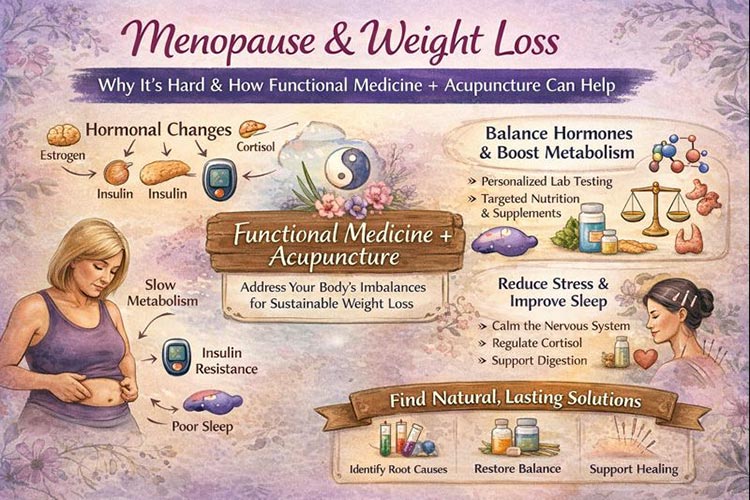
For many women, menopause brings unexpected changes — and stubborn weight gain is often one of the most frustrating. Even when eating well and staying active, the scale may creep up or refuse to budge. This isn’t your imagination or lack of effort — it’s biology.
What Happens to Weight During Menopause?
During menopause, estrogen levels decline and the balance between hormones that regulate appetite, metabolism, stress, and fat storage shifts. These changes can:
All of these factors make weight loss feel much harder than it did before menopause.
Functional medicine takes a root cause approach to this problem. Instead of just telling you to eat less and exercise more, it evaluates your unique hormonal status, inflammation, blood sugar control, thyroid function, stress response, and nutrient levels. This comprehensive assessment allows for a personalized plan that supports your body’s physiology — not fights it.
What Research Shows About Acupuncture and Metabolism
Acupuncture isn’t a magic bullet, but research does support its role as a helpful complement to a holistic weight-loss strategy:
While not all research is conclusive and more large-scale menopause-specific studies are needed, existing evidence is promising and worth considering as part of an integrative plan.
How Acupuncture Supports Weight Loss During Menopause
Acupuncture works on several levels that indirectly support weight loss and overall well-being:
These effects make weight-loss efforts — from nutrition to physical activity — feel more sustainable and effective.
Functional Medicine + Acupuncture: A Powerful Combination
Functional medicine provides the why behind stubborn weight gain in menopause: identifying imbalances in hormones, metabolism, stress response, gut health, and nutrient status. Acupuncture complements this by helping restore balance at a physiological and nervous-system level.
Together, they create a truly integrative plan that supports not just weight loss — but well-being during menopause. This approach often results in benefits beyond the scale, including:
Your Next Steps
Menopause doesn’t have to mean resigning yourself to persistent weight gain. With a personalized plan grounded in science and supported by therapies like acupuncture, you can regain momentum, support your metabolism, and feel confident in your body again.