Rotator Cuff Injuries: Natural Treatment Options Before Considering Surgery

Dr. Tatyana's Health and Wellness Blog
Treating the whole person to restore optimal health. Check back often for up-to-date news and information about acupunture and Chinese medicine.
Most Recent Posts ...

Posted on: 6/22/2026

Search All Blog Posts
Blog Post Archive Categories
- Rotator Cuff Injuries: Natural Treatment Options Before Considering Surgery
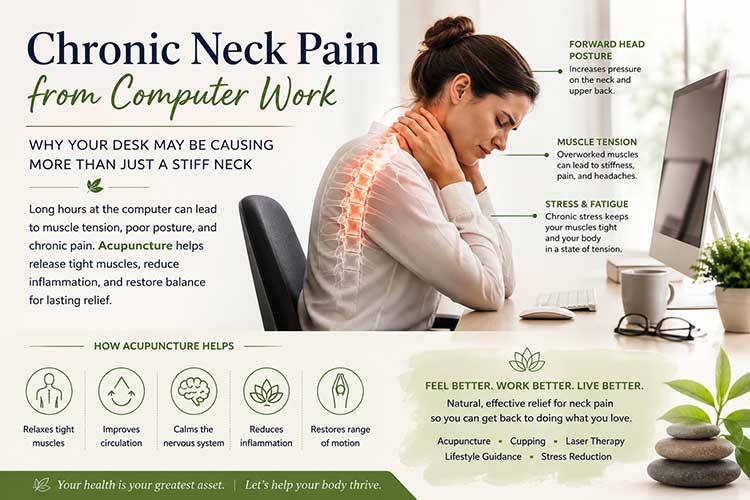
- Neck Pain from Chronic Computer Work: Why Your Desk May Be Causing More Than Just a Stiff Neck
- Sports Injuries vs. Trauma: What's the Difference and Why Early Treatment Matters
- Stubborn Weight Retention After Menopause: Why It's So Common - and How Acupuncture Can Help
- Chronic Stress and Burnout: How Acupuncture Can Help You Restore Balance
- Stubborn Neck Pain: How Acupuncture Can Help You Find Lasting Relief
- Chronic Fatigue and Chronic Inflammation: A Holistic Look Through Western and Eastern
- The Hidden Dangers of Overusing Supplements: Are You Taking More Than You Should?
- The Importance of Exercise and How to Stay Motivated for a Healthier You
- Lift your arm overhead
- Reach behind your back
- Throw or catch objects
- Push and pull
- Sleep comfortably on your side
- Maintain shoulder stability during everyday activities
- Pain when lifting the arm
- Pain reaching overhead
- Difficulty fastening a bra or reaching behind the back
- Weakness in the shoulder
- Night pain, especially when lying on the affected side
- Pain while putting on a jacket
- Clicking or catching sensations
- Decreased range of motion
- Difficulty carrying groceries
- Shoulder stiffness
- Pain is manageable
- Shoulder strength is largely preserved
- Daily activities can still be performed
- There is no major traumatic injury
- The patient prefers a non-surgical approach
- Cold laser therapy to support tissue healing
- Cupping therapy to reduce muscle tension and improve circulation
- Myofascial release
- Therapeutic stretching
- Corrective posture training
- Home rehabilitation exercises
- Lifestyle modifications to reduce repetitive strain
- Pendulum exercises
- Wall walks
- Scapular retraction exercises
- External rotation strengthening
- Resistance band exercises
- Posterior capsule stretches
- Avoid repetitive overhead lifting whenever possible.
- Improve your workstation ergonomics.
- Take frequent movement breaks if you work at a computer.
- Strengthen the upper back muscles.
- Stretch the chest muscles regularly.
- Warm up before sports or exercise.
- Maintain good posture throughout the day.
- Sudden inability to lift your arm
- Severe weakness after an injury
- A visible shoulder deformity
- Persistent numbness or tingling
- Significant swelling or redness
- Fever associated with shoulder pain
- Pain that continues despite several weeks of conservative treatment
Rotator Cuff Injuries: Natural Treatment Options Before Considering Surgery
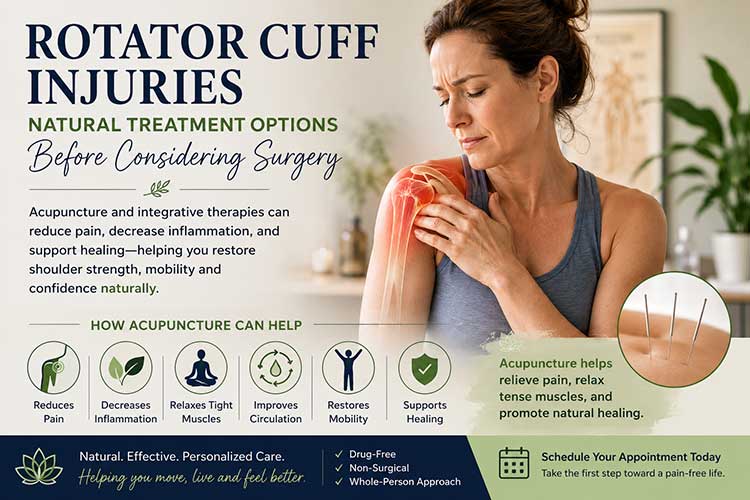
Shoulder pain is one of the most common reasons people seek medical care. Whether it develops gradually from repetitive movements or suddenly after lifting something heavy, a rotator cuff injury can make even the simplest daily tasks painful.
Many people assume that shoulder pain automatically means surgery is inevitable. Fortunately, that is not always the case. In fact, many rotator cuff injuries respond very well to conservative treatment, especially when addressed early.
At Family Acupuncture and Health, we help patients reduce pain, improve shoulder mobility, and return to their normal activities using acupuncture and other evidence-based, non-surgical therapies. Our goal is to address the underlying cause of the pain, promote healing, and restore normal function.
What Is the Rotator Cuff?
The rotator cuff is a group of four muscles and their tendons that stabilize the shoulder joint and allow smooth, coordinated movement of the arm.
These muscles work together to help you:
Because the shoulder has the greatest range of motion of any joint in the body, it is also one of the most vulnerable to injury.
What Causes Rotator Cuff Injuries?
Rotator cuff problems may develop suddenly or gradually.
Common causes include:
Repetitive Overhead Activities
Painters, electricians, carpenters, swimmers, tennis players, baseball players, hairstylists, and healthcare professionals frequently perform repetitive overhead movements that place stress on the shoulder tendons.
Age-Related Degeneration
As we age, blood flow to the tendons naturally decreases, making them more susceptible to wear and small tears.
Poor Posture
Forward head posture and rounded shoulders alter shoulder mechanics and increase stress on the rotator cuff.
Trauma
Falls, lifting heavy objects, or sudden pulling injuries can cause acute tears.
Muscle Imbalances
Weak upper back muscles combined with tight chest muscles can contribute to abnormal shoulder movement and chronic irritation.
Signs and Symptoms
Symptoms vary depending on the severity of the injury.
Common symptoms include:
Many patients notice that sleeping becomes one of the most difficult activities.
Is It Tendinitis, Bursitis, or a Tear?
Not every rotator cuff injury is the same.
Rotator Cuff Tendinitis
Inflammation of the tendons caused by overuse or repetitive motion.
Shoulder Bursitis
Inflammation of the fluid-filled sac (bursa) that cushions the shoulder.
Partial Tear
Only part of the tendon is damaged.
Full Thickness Tear
The tendon is completely torn from the bone.
The appropriate treatment depends on the specific diagnosis, symptoms, age, activity level, and functional goals.
Do All Rotator Cuff Tears Need Surgery?
No.
Research has shown that many partial tears—and even some full-thickness tears—can be managed successfully without surgery, especially when the primary goals are reducing pain and improving function.
Conservative treatment is often appropriate when:
However, surgery may be recommended for large traumatic tears, significant weakness, or when conservative care fails.
How Acupuncture Can Help
Acupuncture has been used for centuries to treat musculoskeletal pain and is now commonly integrated into modern pain management.
Reduces Pain Naturally
Acupuncture stimulates the body's natural pain-relieving mechanisms, including the release of endorphins and other neurotransmitters.
Decreases Inflammation
Treatment may help reduce inflammation around irritated tendons and soft tissues, creating a better environment for healing.
Relaxes Tight Muscles
Rotator cuff injuries often cause surrounding muscles to tighten in an attempt to protect the shoulder. Acupuncture helps relax these muscles and reduce painful spasms.
Improves Blood Circulation
Healthy circulation delivers oxygen and nutrients needed for tissue repair while helping remove inflammatory byproducts.
Restores Mobility
As pain decreases and muscle tension improves, patients often regain shoulder movement more comfortably.
Supports the Nervous System
Chronic pain can keep the nervous system in a heightened state of sensitivity. Acupuncture helps calm the nervous system, reducing pain perception and promoting relaxation.
Additional Natural Treatments
Depending on your condition, your treatment plan may include:
Combining therapies often leads to faster recovery and longer-lasting results.
Shoulder Exercises That May Help
Once acute pain has improved, gentle strengthening and mobility exercises become an important part of recovery.
Examples include:
Exercises should always be individualized based on your diagnosis and stage of healing.
Everyday Habits That Protect Your Shoulders
Simple changes can reduce unnecessary stress on the rotator cuff:
These habits not only reduce pain but also help prevent future injuries.
When Should You See a Healthcare Provider?
Seek prompt medical evaluation if you experience:
Early diagnosis can improve treatment outcomes.
Frequently Asked Questions
Does acupuncture hurt?
Most patients find acupuncture surprisingly comfortable. The needles are extremely thin, and many people feel deeply relaxed during treatment.
How many acupuncture treatments will I need?
The number of treatments depends on the severity of your injury, how long you have had symptoms, your overall health, and your treatment goals. Acute injuries often respond more quickly than chronic conditions.
Can acupuncture help after shoulder surgery?
Yes. Acupuncture is commonly used during postoperative rehabilitation to help manage pain, reduce muscle tension, improve circulation, and support recovery.
Can I combine acupuncture with physical therapy?
Absolutely. Acupuncture and physical therapy complement each other well. Reducing pain through acupuncture often allows patients to participate more comfortably in strengthening and rehabilitation exercises.
Take the First Step Toward Recovery
Living with shoulder pain can affect nearly every part of your life—from getting dressed in the morning to sleeping through the night.
The encouraging news is that many rotator cuff injuries improve with conservative treatment. Early intervention can reduce pain, improve mobility, and help you avoid unnecessary procedures.
At Family Acupuncture and Health, we develop individualized treatment plans designed to reduce pain, restore shoulder function, and support your body's natural healing process. Whether your injury is related to sports, work, aging, or repetitive strain, we are committed to helping you move comfortably and return to the activities you enjoy.
If shoulder pain is limiting your life, don't wait until it becomes more severe. Natural, effective treatment may help you recover sooner than you think.